
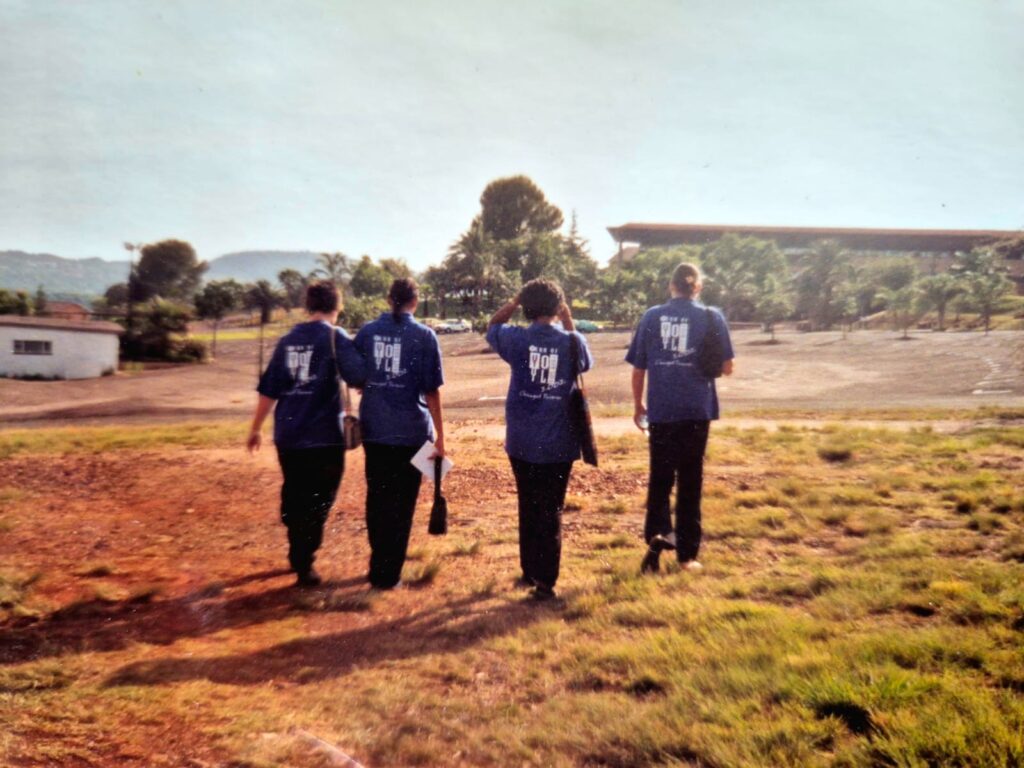
In my early days of recommitting to Christianity in my late teens, I lived in a shared house with other young people from wildly different backgrounds during a gap year with my church. There was one girl, a white Afrikaner straight from the farm, who barely spoke English. We bonded like sisters.
I was determined to progress my textbook Afrikaans to actually speaking the language, and she to improve her English. We fumbled along, seated side-by-side in the garden, digging away, doing chores, and laughing over nonsense as only teenage girls can do. Her snoring drove me crazy. I’m certain I returned the favour in a dozen ways she was kind enough never to raise.

We fell out of contact, as one does. Years later, I would find her spreading the lie of white genocide in South Africa on her Facebook page. It felt like a slap in the face, and I unfriended her, barely recognising the person she’d become.
Looking back
But that decision haunted me. I’d never even thought to ask her what her views might be back then. For us, exploring our calling and faith transcended all that.
But social media has changed that, and us, hasn’t it? It’s driven us deep into our ideological and tribalistic corners, with shared space ever shrinking for common dialogue, even where we disagree. I’m not sure we even know how to disagree anymore — and I know I am guilty of that.
I thought of her again this week, watching Steven Spielberg’s new alien blockbuster Disclosure Day. I was profoundly moved by some of the themes it explored.
It wasn’t necessarily the extraterrestrial question. I know enough of science to understand that logically there must be intelligent life elsewhere in the universe. And unlike certain characters in the movie, I don’t find that fact to be particularly challenging in terms of my faith or worldview.

Rather, what struck me was the note on empathy, as embodied in Emily Blunt’s character Margaret Fairchild.
Margaret goes from being a restless weather reporter to having deep insight into people’s inner worlds and lived reality, but viewed through the most sympathetic light possible. As she puts it later in the movie, it’s like she is them, briefly.

But I’m not sure that’s quite right either. Because if she really heard or was the voice in the average person’s head, she would reflect back that endless self-criticism and negativity that affects all of us to a lesser or greater degree. Instead, she seems to see the person at their best, usually by reminding them how they really feel about the people they love most in their lives and how they should show up for them.
Why did this strike me so profoundly? Well, my own character tends towards judgment and anger, particularly in the face of injustice — and spectacular anger should I perceive that injustice directed at myself personally.
I have embarked on a decade-plus journey in therapy to address these triggers, but even if I don’t directly manifest my anger, it’s very much present, a fact people can often sense even when it’s kept at bay.
Anger writ large
So, what am I so angry about? Well, the state of the world, for one. I have heard it said that every generation believes the world to be ending — and I know for a fact that humanity has improved on key indicators over the long view, like child mortality, education, and health. But I can’t stop thinking about the polycrisis we now face: climate change, inequality and irresponsible AI development.
I am furious at the absolute lack of regard from world leaders and those who could bring our emissions back to pre-industrial levels, saving not just us but countless species we’re already losing. They choose not to because… profit. And that’s what really makes me angry: we continue to burn through the earth like we think we have another one.
I also feel intense anger at the collective disavowal of responsibility by the new breed of billionaires — Peter Thiel, Jeff Bezos, Mark Zuckerberg and Elon Musk. Long gone are the pledges of the likes of Warren Buffett and Bill Gates, who, no matter what we may think of the system that gave them such an inequitable level of wealth, genuinely tried to use it for good. The new breed, instead, have a mentality of escape or ascension: they will retreat into their extravagant bunkers, built deep into the private islands or mountains they have purchased, doing what’s best for them after having been instrumental in the destruction of our shared space and civilisation.

And this is all obvious, so why am I even repeating it? Because I find this same attitude filtering into the language and mentality of everyday citizens: ordinary joes, middle-class people, and beyond. This retreat into a lazy libertarianism: let everyone do what they want. But that’s not just you being non-judgmental. It’s a retreat from a collectivism that has long kept us alive and prosperous, one that considers the weakest and the collective good, not just what’s right for me.
In theory, I know better than to judge. When it comes to these massive structural issues in our society, I must play the ball, not the man. But when I am sitting at a dinner table where people are dismissive of the crisis in Gaza or whitewash Israel’s war crimes, it’s very difficult to hold back — and to know where to direct my anger if not at the person opposite me. And to be honest, this has taken a toll on some of my friendships.
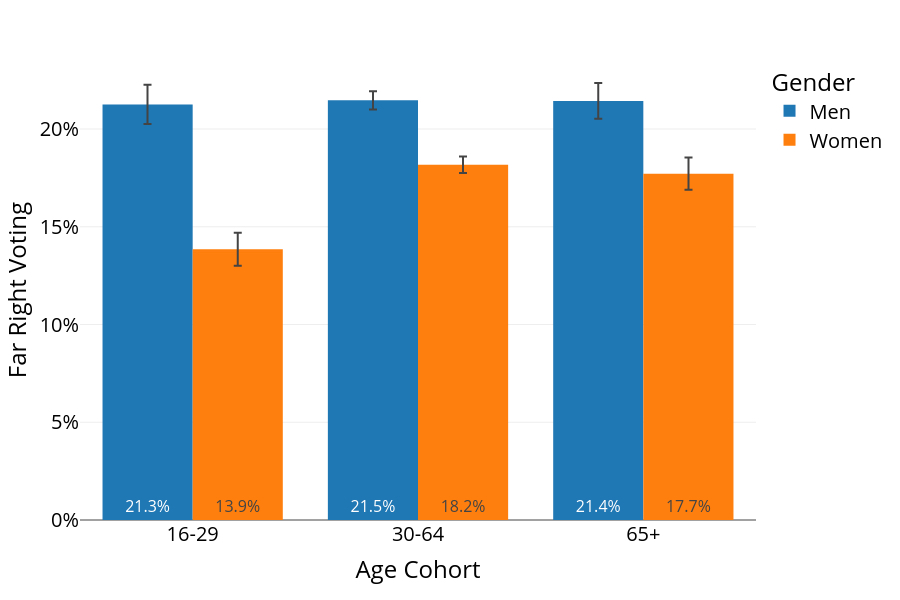
My dating life, too. It’s hard to respect a man intellectually when he quotes the tech-bro and MAGA set on his timeline as if they’re inspirational, or parrots dangerous misinformation about vaccines. These men I encounter are not isolated cases; research on male conservative politics highlights a growing global gender gap.
But I know at a deep level my judgements aren’t entirely right – it’s a black and white position that flattens both complexity and humanity.
Which is why Margaret’s character hit so hard. I’ve been battling with this for a while now: where do I direct my rage — for yes, rage it sometimes is — at the state of things and the sheer ignorance of those who accept and perpetuate it? Margaret offers one model: radical acceptance, one that cuts through the surface levels of ideology, politics and culture and goes straight to the heart of the person, who they are with their loved ones, at their best.
Great love doesn’t look away
But I’m not sure pure empathy is the answer, which is where Margaret initially starts her journey and disarms her enemies. As with so many great characters, hers is the Christ-like, messianic arc. But the actual Christ didn’t just love his enemies. He was moved to great anger, notably when he cleared the temple of exploitative traders.

Margaret, too, doesn’t just love those before her; she actively works to correct the central injustice presented in the film. Great love does not mean looking away from injustice. But it’s the how that matters. I haven’t gotten that right, and it frustrates me. And I know that on the scales between empathy and righteous anger, I weigh far too heavily towards the latter. The anger Christ deployed was a tiny touch, as reported in the gospels, compared to his astounding compassion that dominates most of his story, his life and his eventual sacrifice.
So, where to from here for me? The final word spoken in the movie is Margaret’s. She turns to the audience and says one word: “Listen.”
Perhaps that’s a good place to start.